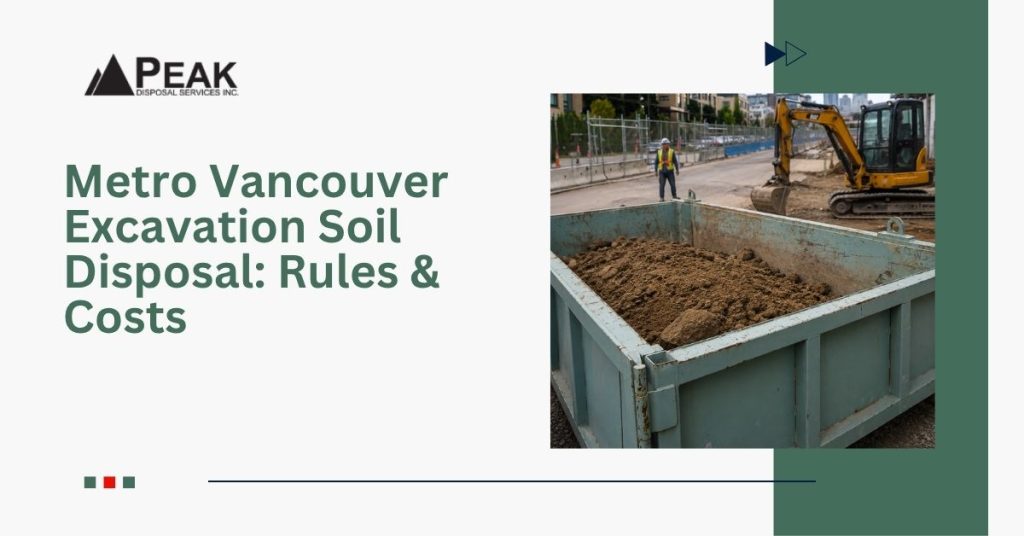
Excavation projects can generate large quantities of soil in a short period. Whether the work involves foundations, drainage systems, retaining walls, landscaping, utilities, driveways, or site redevelopment, deciding where that soil will go should happen before digging begins.
Excavated soil cannot be managed based on volume or appearance alone. Its weight, source-site history, composition, possible contamination, intended destination, and the receiving facility’s acceptance requirements can all affect how it must be assessed, loaded, transported, and handled.
Planning these details early can help contractors avoid rejected loads, overweight bins, additional handling, project interruptions, and unexpected disposal costs.
Here is the Quick Answer:
Before arranging excavation soil removal:
- review the property’s current and former uses;
- estimate the quantity of soil being removed;
- do not assume soil is uncontaminated based on appearance;
- determine whether assessment, testing, or professional involvement is required;
- confirm where the soil can legally and practically be received;
- keep soil separate from concrete, asphalt, vegetation, garbage, and demolition debris;
- plan for transportation weight rather than bin volume alone;
- coordinate suitable bins, loading instructions, and pickup timing before excavation begins.
Provincial soil-relocation requirements and receiving-facility rules can vary according to the source site, soil condition, quantity, and destination.
Why Excavation Soil Requires More Planning Than General Construction Waste
Soil differs from most renovation and construction debris in two important ways: it is extremely dense, and its environmental condition may affect where it can go.
Materials such as wood, drywall, insulation, and packaging usually occupy substantial container space before reaching transportation weight limits. Soil behaves differently. A bin can become too heavy for the planned hauling configuration while still appearing only partially full.
For a broader explanation of how dense materials affect bin loading, see Peak Disposal’s guide to avoiding overweight fines on dirt and concrete bins.
The source of the material is equally important. Soil excavated from a residential garden may present different considerations from soil removed from a former service station, industrial property, auto-repair facility, dry-cleaning site, or another property associated with an industrial or commercial use listed in Schedule 2 of British Columbia’s Contaminated Sites Regulation.
Receiving facilities may also require advance information or documentation before agreeing to accept a load. Arranging removal without confirming these requirements can lead to delays, rejected material, additional transportation, or rehandling.
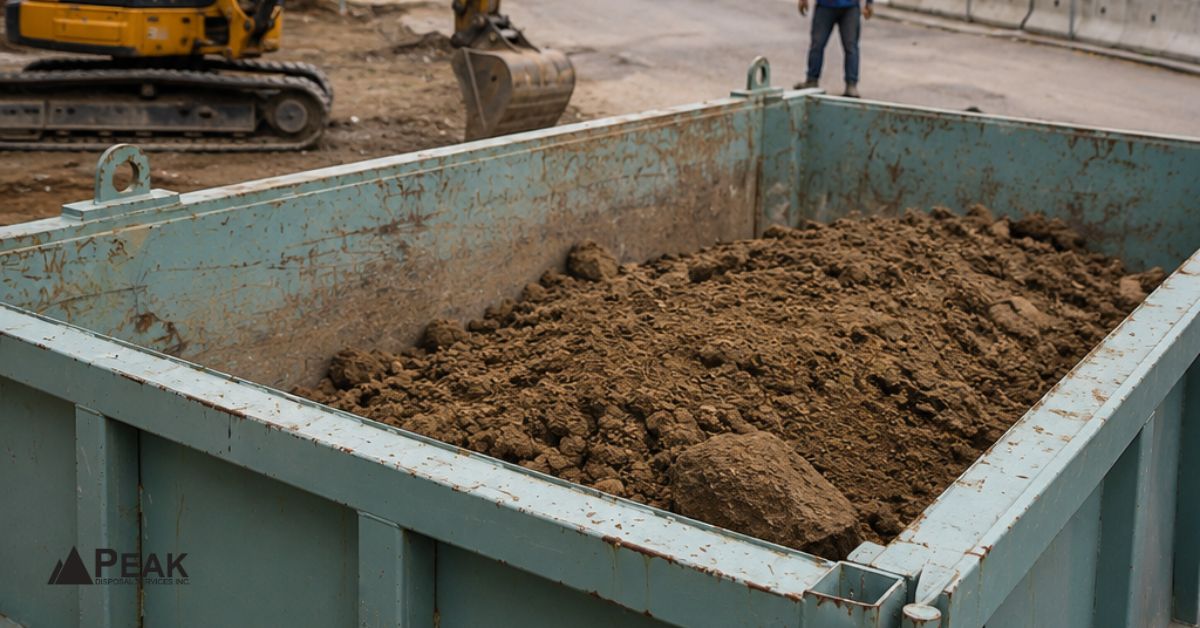
What type of soil are you removing?
“Excavated soil” is a broad description rather than a complete classification. Before arranging hauling, the project team should understand the source, condition, and composition of the material.
Uncontaminated or Non-Waste Soil
Under British Columbia’s soil-relocation framework, whether soil is considered waste depends largely on its quality in relation to the standards applicable at the receiving site. Soil that does not exceed the applicable soil and vapour standards may be treated as non-waste soil, subject to any site-specific standards, background concentrations, exemptions, and other regulatory requirements.
Separate notification and documentation requirements may apply when that soil is removed from a property with a current or former industrial or commercial use listed in Schedule 2 of the Contaminated Sites Regulation.
Soil that meets the relevant requirements may be suitable for relocation, reuse, or acceptance at an authorized receiving site. However, eligibility depends on more than the material looking clean. Source-site history, soil characterization, quantity, destination, land use, and receiving-site authorization may all matter.
The term “clean fill” is often used conversationally, but it should not be treated as a universal legal or facility classification. Receiving facilities may apply their own definitions, testing requirements, and acceptance criteria.
Soil From a Potentially Contaminating Site
Properties with certain current or former industrial or commercial uses may require additional assessment before soil is relocated.
Examples can include sites associated with:
- fuel storage or service stations;
- automotive repair;
- dry cleaning;
- industrial manufacturing;
- chemical handling or storage;
- waste management;
- other activities identified in Schedule 2 of the Contaminated Sites Regulation.
A site’s present appearance does not necessarily reveal its historical use. Reviewing environmental records, property history, previous assessments, and project documentation can therefore be an important early step.
For qualifying relocations of non-waste soil from Schedule 2 sites, a qualified professional may need to complete and submit a Soil Relocation Notification Form before the soil is moved.
Contaminated Soil
Soil containing contaminants above applicable standards may require a different management pathway.
Depending on the applicable regulatory pathway and receiving destination, contaminated soil may require:
- assessment by an environmental professional;
- laboratory testing;
- characterization of the contaminants present;
- approval from a suitable receiving facility;
- special loading, transportation, or documentation;
- treatment or disposal at an authorized site;
- a Contaminated Soil Relocation Agreement or another applicable authorization or approval.
British Columbia’s Contaminated Sites Regulation contains dedicated requirements and exemptions governing contaminated-soil relocation and disposal. The correct process depends on the source site, contaminant concentrations, receiving destination, quantity, and applicable regulatory pathway.
Mixed Excavation Debris
Excavated soil may also contain other materials, including:
- concrete;
- asphalt;
- gravel;
- roots and sod;
- wood;
- construction debris;
- household garbage;
- buried waste;
- liquids or hazardous material.
These materials can affect acceptance, processing, recycling opportunities, and cost. A receiving facility that accepts soil may not accept the same material when it is mixed with demolition waste, organic matter, garbage, or suspected contaminants.
Separating waste streams during excavation is generally easier than trying to sort a mixed load after it has been placed in a bin.
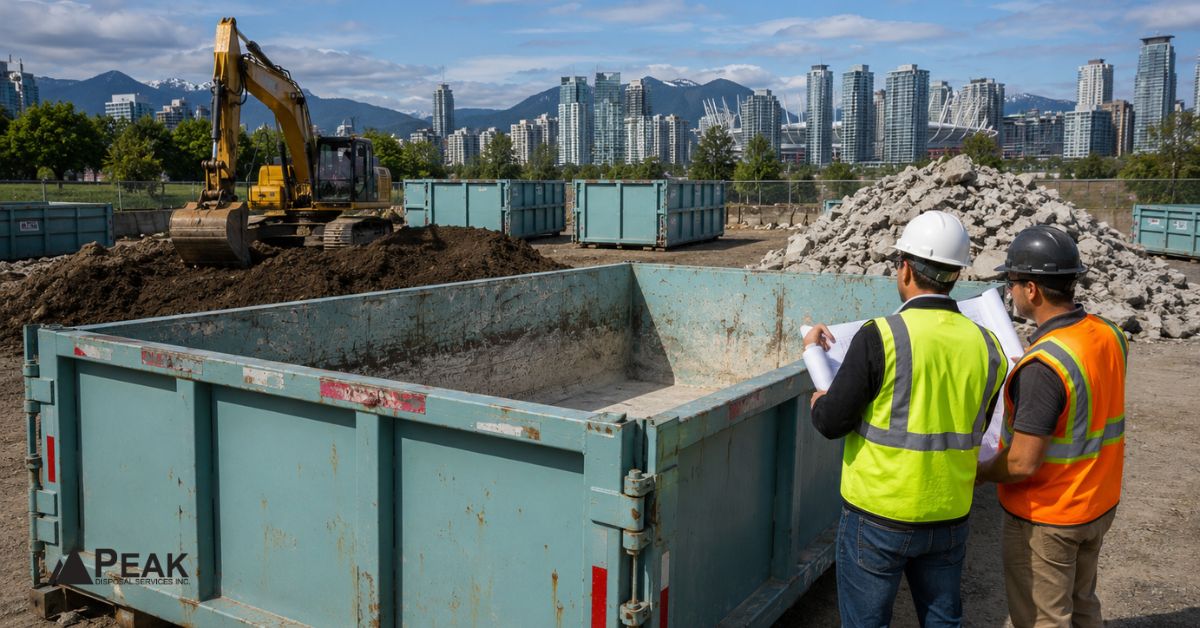
Soil Relocation Rules in British Columbia
Soil management in Metro Vancouver may involve both provincial regulatory requirements and the separate acceptance rules of municipalities, landfills, recycling facilities, and private receiving sites.
Source-site history matters
British Columbia’s current framework places particular emphasis on soil originating from sites with current or former uses listed in Schedule 2 of the Contaminated Sites Regulation.
Before soil is moved, the project team may need to determine:
- whether the source property has a Schedule 2 use;
- whether the soil qualifies as non-waste soil;
- whether testing or characterization is required;
- whether an exemption applies;
- whether notification or an agreement is needed;
- whether the proposed receiving site is authorized and suitable.
This determination may require the involvement of a qualified environmental professional. A bin-rental or hauling provider should not be expected to make a regulatory soil classification based only on a verbal description or visual inspection.
When a Soil Relocation Notification May Be Required
For certain movements of non-waste soil from a source site with a current or former Schedule 2 use, a qualified professional must submit a Soil Relocation Notification Form at least seven days before the project start date.
The provincial guidance identifies several situations in which notification may not be required. One example is where the soil volume is less than 30 cubic metres per project, subject to stated conditions and exceptions. The exemption does not apply universally, including to certain high-risk sites, and it does not eliminate other regulatory, municipal, contractual, or receiving-facility requirements.
Contractors should therefore avoid treating 30 cubic metres as a general threshold below which soil can automatically be moved without review.
Receiving-Site Requirements
The destination must be legally authorized and operationally willing to receive the soil.
Before loading begins, a receiving site may request information such as:
- source-property details;
- current and historical site use;
- estimated soil quantity;
- soil-characterization results;
- laboratory reports;
- qualified-professional documentation;
- contaminant information;
- intended land use;
- advance booking or written approval.
Acceptance at one facility does not mean the soil will be accepted at every other site. Requirements can differ according to material composition, moisture, contamination status, quantity, facility authorization, and available processing capacity.
Metro Vancouver Facility Restrictions
Metro Vancouver’s Disposal Ban Program restricts certain materials from disposal as garbage at regional facilities. The current program manual includes inert fill material—such as soil, sod, gravel, concrete, and asphalt—when it exceeds 0.5 cubic metres per load.
This does not mean that all soil has a single approved destination. It means project teams should identify an appropriate reuse, recycling, recovery, treatment, or authorized disposal option rather than assuming excavation soil can be placed in a general garbage load.
Private facilities and other receiving sites may apply additional restrictions, documentation requirements, or acceptance criteria.
What affects excavation soil disposal costs?
There is no single standard cost for excavation soil removal. Pricing depends on the material, project conditions, transportation requirements, and receiving destination.
Soil Weight and Quantity
Soil is generally charged and planned according to weight, volume, number of loads, or a combination of these factors.
A project generating a large excavation volume may require:
- several smaller heavy-material bins;
- repeated bin exchanges;
- multiple truckloads;
- staged excavation and hauling;
- another hauling method suited to continuous or high-volume work.
At Metro Vancouver solid-waste facilities, actual disposal or recycling costs for accepted materials are based on material weight, as determined by weighing vehicles when they enter and exit the facility.
Soil Classification and Testing
Projects involving uncertain site history or suspected contamination may incur costs for:
- environmental assessment;
- sampling;
- laboratory analysis;
- qualified-professional services;
- soil characterization;
- regulatory forms;
- reporting or recordkeeping.
These costs may occur before hauling begins, but they can help prevent the significantly greater disruption of moving material to a facility that cannot accept it.
Receiving-Facility Fees
Receiving-site fees can vary according to:
- whether the soil is uncontaminated, non-waste, or contaminated;
- contaminant type and concentration;
- moisture content;
- the presence of concrete, asphalt, vegetation, or garbage;
- processing, treatment, or disposal requirements;
- weight and quantity;
- facility-specific pricing.
The lowest advertised tipping fee is not necessarily the lowest overall project cost. A more distant facility, additional testing requirement, rejected load, or need to rehandle the material can change the total substantially.
Hauling Distance
The distance between the project and an appropriate receiving site can influence:
- travel time;
- fuel and transportation requirements;
- the number of loads completed in a day;
- scheduling;
- driver and equipment time;
- overall hauling cost.
The closest facility may not be able to accept the specific soil type, so the approved destination should be confirmed before estimating transportation requirements.
Site Access and Loading Conditions
Challenging access can increase the coordination needed for delivery, loading, and pickup.
Relevant conditions may include:
- narrow driveways or gates;
- soft or unstable ground;
- steep grades;
- limited truck-turning space;
- overhead wires or branches;
- street-access restrictions;
- traffic or pedestrian management;
- insufficient staging space;
- equipment waiting time.
Providing accurate access information before delivery helps determine whether a bin can be safely placed and collected.
Contamination or Mixed Materials
Unexpected contamination or mixed waste can change the planned destination and pricing.
For example, soil that was expected to be suitable for one receiving site may require reassessment if crews discover:
- staining;
- unusual odours;
- buried drums or tanks;
- ash or waste;
- oily material;
- demolition debris;
- unexpected liquids.
These signs do not prove contamination by themselves, but they should trigger a pause and further review rather than continued loading.
Project Scheduling
Poor excavation sequencing can lead to:
- bins sitting unused;
- excavation crews waiting for an exchange;
- material accumulating without an approved destination;
- rushed pickup requests;
- additional equipment handling;
- inefficient repeat trips.
Coordinating excavation, loading, documentation, receiving approval, and pickup timing can help control both operational delays and cost.
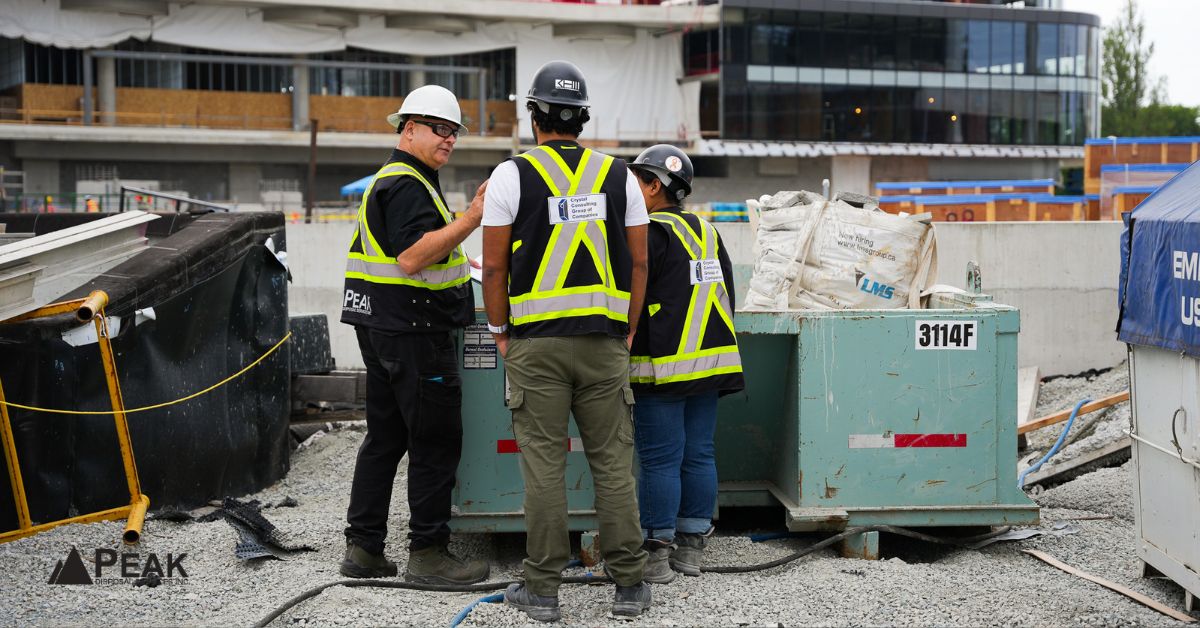
Choosing the Right Bin or Hauling Method
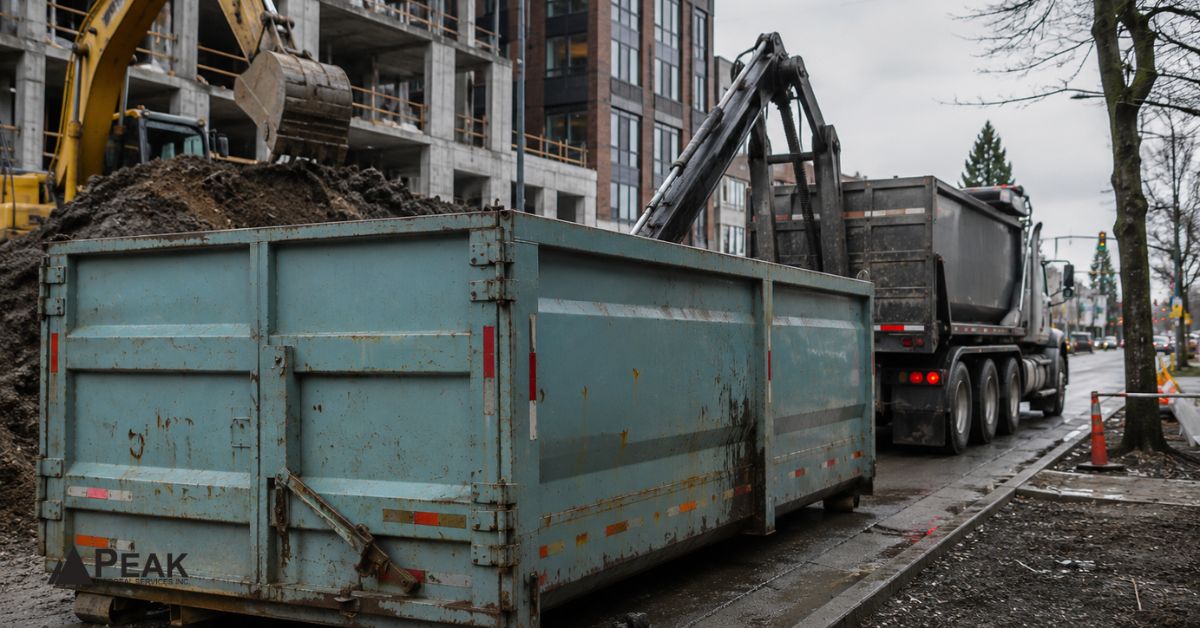
Container selection for soil should be driven primarily by transportation weight rather than the apparent amount of available space.
Smaller Bins for Dense Soil
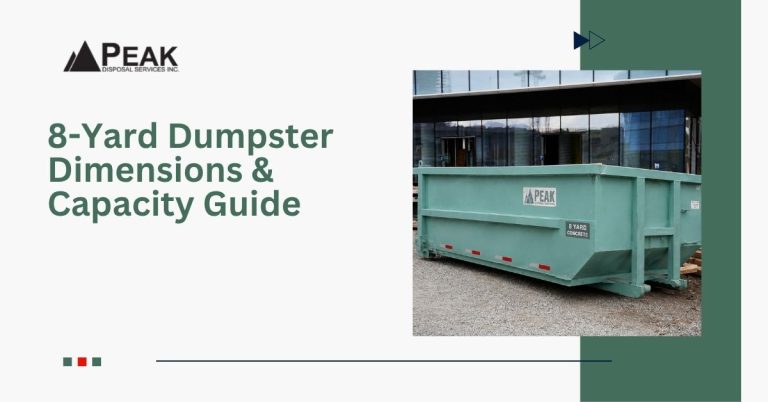
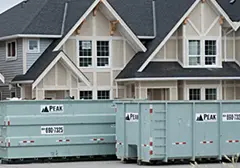
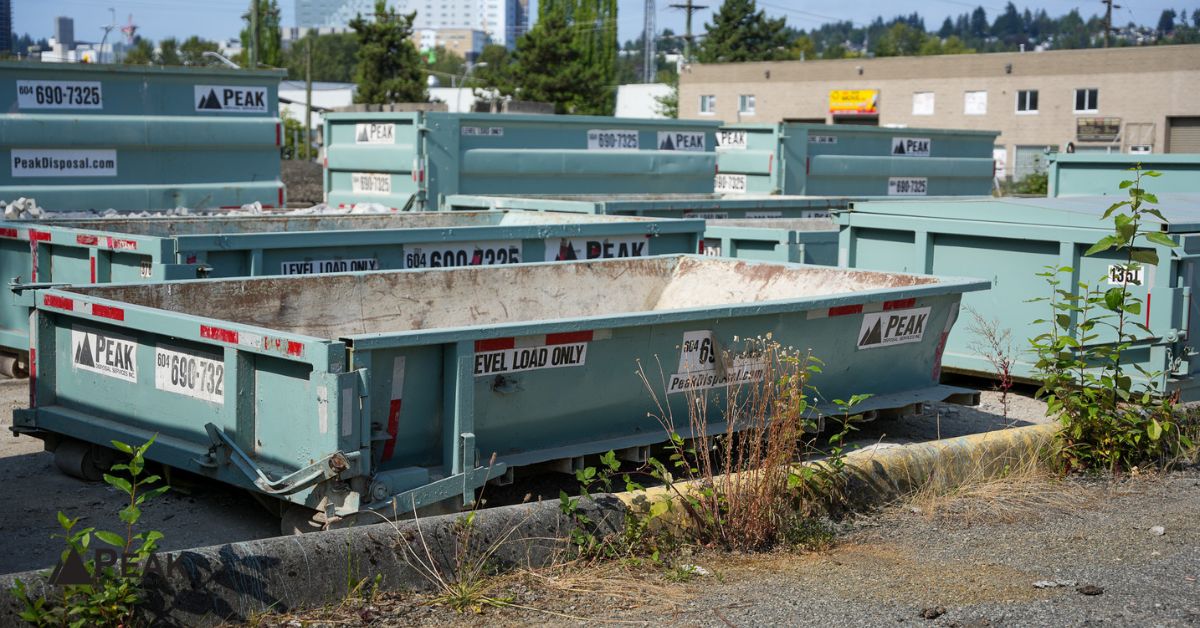
Peak Disposal’s smaller roll-off bins are generally the relevant starting point for heavy-material projects:
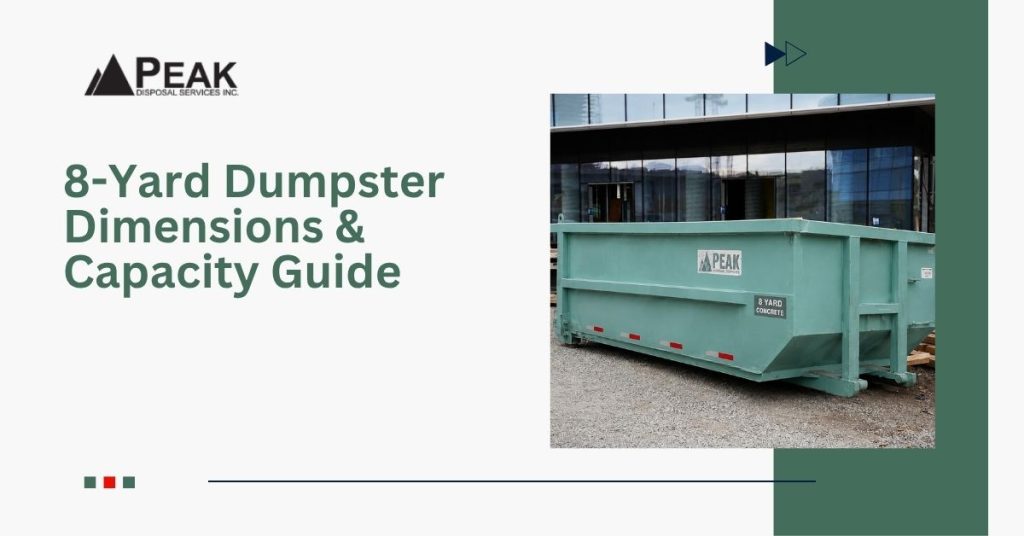
- 8-yard bin: 15’ × 8’ × 2’
- 10-yard bin: 16’ × 8’ × 2.5’
Their lower profiles can support loading by hand or equipment, while their smaller capacities help manage dense material in planned quantities.
However, ordering an 8- or 10-yard bin does not mean it can automatically be filled to the top with any type of soil. The appropriate container, loading level, and quantity depend on the soil, moisture, mixed materials, equipment configuration, transportation limits, and instructions provided by dispatch.
When Another Hauling Method May Be More Suitable
A roll-off bin may work well for smaller or staged excavation projects, but high-volume work may require a different approach.
Another hauling method may be more practical when:
- excavation is continuous;
- substantial volumes must be removed quickly;
- equipment can load trucks directly;
- multiple daily loads are expected;
- there is insufficient space for repeated bin exchanges;
- project specifications require a particular transportation method.
For high-volume or continuous excavation, contractors may need to determine whether roll-off bin service remains suitable or whether another hauling arrangement should be made through the appropriate project provider. Peak Disposal can confirm whether its available bin service is suitable based on the excavation volume, loading equipment, schedule, site access, and material information provided.
Why Large Roll-Off Bins Are Usually Not the Answer
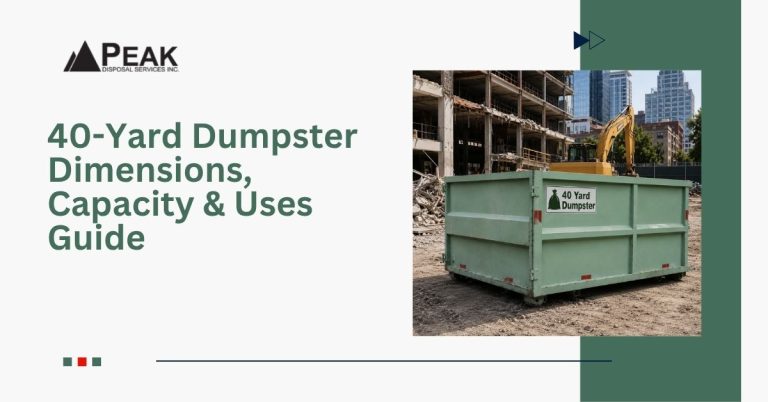
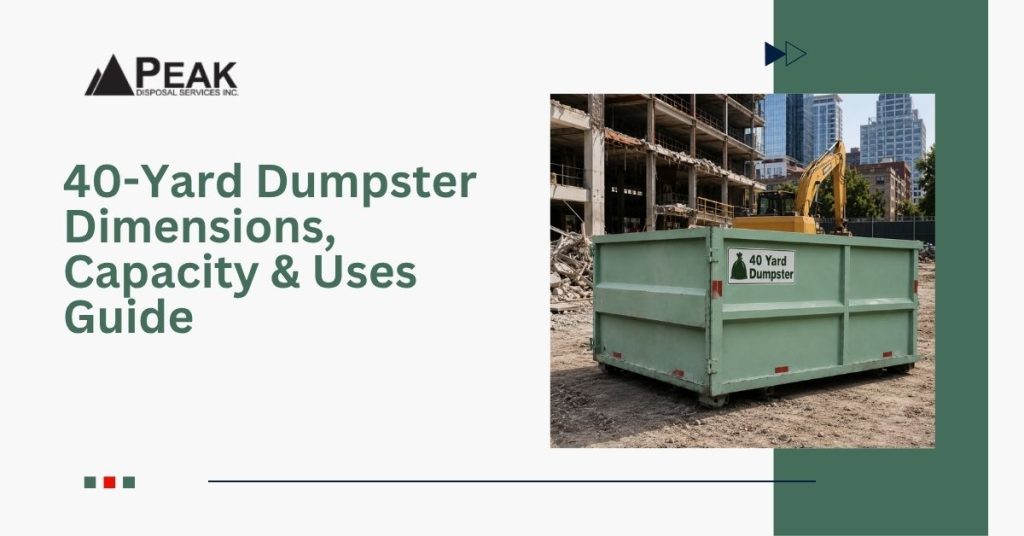
A 20-, 30-, or 40-yard container may appear more efficient because it offers greater volume. For dense soil, however, that additional space generally cannot be used in the same way it can for bulky, lighter construction debris.
Filling a large roll-off bin with soil can cause the load to reach transportation limits long before the container is full. Smaller planned loads are generally more practical for controlling weight and coordinating safe hauling.
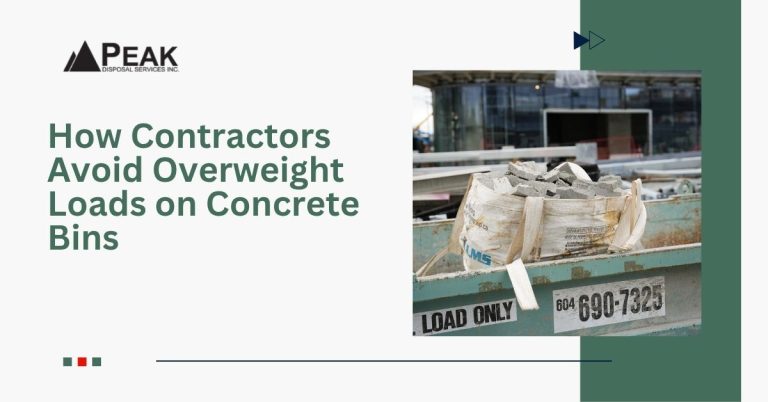
The same weight-first planning principle applies to concrete, as explained in How Contractors Avoid Overweight Loads on Concrete Bins.
Best Practices Before Excavation Begins
- Review the Source Site: Check the property’s current use, historical use, environmental records, previous assessments, and available project documents.
- Estimate the Quantity: Calculate the approximate excavation dimensions, but remember that excavated soil can occupy more space after it is loosened than it did in the ground.
- Determine Whether Professional Assessment Is Needed: Involve a qualified environmental professional when site history, suspected contamination, regulatory requirements, or receiving-facility conditions make assessment necessary.
- Characterize the Soil Where Required: Complete any required sampling, testing, documentation, notification, or approval before removal begins.
- Confirm the Receiving Destination: Do not load soil until an appropriate facility or receiving site has agreed to accept it under the applicable conditions.
- Select the Bin or Hauling Method: Choose equipment based on soil weight, quantity, loading method, project schedule, access, and destination.
- Plan Bin Placement and Truck Access: Confirm stable placement, required clearances, equipment access, loading direction, and pickup access.
- Separate Materials: Keep soil separate from concrete, asphalt, roots, sod, garbage, and demolition materials unless the receiving facility and hauling provider have approved the mixed load.
- Schedule Pickups or Exchanges: Coordinate hauling with the excavation sequence so crews do not continue loading beyond the planned quantity while waiting for collection.
- Maintain Records: Retain relevant testing, notifications, receiving approvals, load tickets, weight records, and facility documentation for the project.
Best Practices During Loading and Hauling
Once excavation begins:
- follow the loading instructions provided for the project;
- do not assume the bin can be filled to the rim;
- distribute soil as evenly as practical;
- prevent material from extending above the container walls;
- avoid adding unapproved waste streams;
- keep the loading and pickup area accessible;
- control loose material and runoff where required;
- arrange pickup when the planned load is reached;
- stop work if unexpected soil conditions or buried materials are encountered.
If the soil differs materially from the information provided to the facility, environmental professional, or hauling provider, the project team should reassess the disposal plan before transporting it.
Common Excavation Soil Disposal Mistakes
Common planning errors include:
- assuming soil is uncontaminated because it looks or smells normal;
- failing to review the property’s previous uses;
- ordering a bin before confirming the destination;
- selecting the largest available bin based only on excavation volume;
- filling a soil bin to the top without following loading instructions;
- mixing soil with concrete, asphalt, sod, roots, or garbage;
- failing to disclose suspected contamination or unusual site conditions;
- beginning removal before required documentation is complete;
- assuming one facility’s acceptance rules apply everywhere;
- underestimating the number of loads;
- continuing excavation after unexpected staining, odour, tanks, or buried waste is found.
Avoiding these mistakes begins with communication among the contractor, property owner, environmental consultant where required, hauling provider, and receiving facility.
When to Involve an Environmental Professional
Professional environmental advice may be necessary when:
- the site has a current or former Schedule 2 use;
- the property has a known spill or remediation history;
- contamination is suspected;
- staining, odours, tanks, drums, ash, or buried waste are found;
- a receiving facility requests analytical information;
- regulatory notification or an agreement may be required;
- a large or complex soil relocation is planned;
- the project team cannot establish an appropriate soil classification or destination.
An environmental professional can help assess the source site, plan sampling, interpret analytical results, determine applicable standards, and advise on regulatory requirements.
How Peak Disposal Supports Excavation Projects
Peak Disposal helps contractors, builders, landscapers, developers, property managers, and homeowners coordinate construction bin rental and hauling for excavation projects.
Support may include:
- selecting a suitable heavy-material bin;
- reviewing estimated material quantity;
- discussing site and loading access;
- coordinating delivery, exchanges, and pickup;
- planning multiple loads;
- confirming the information dispatch needs before service;
- coordinating hauling based on the disclosed and approved material stream and applicable receiving requirements.
Customers should disclose known or suspected contamination, mixed materials, site history concerns, and available testing or documentation before delivery.
Peak Disposal does not replace a qualified environmental professional. Where soil assessment, testing, classification, notification, or regulatory approval is required, those steps must be completed by the appropriate project parties before hauling proceeds.
Related Resources
- Dirt and Concrete Bin Rentals: How to Avoid Overweight Fines in BC
- How Contractors Avoid Overweight Loads on Concrete Bins
- Concrete Disposal Costs in Metro Vancouver: What Affects Pricing?
- 8-Yard Dumpster Dimensions & Capacity
- 10-Yard Dumpster Dimensions & Capacity
- Construction Bin Rental
- Our Bins
Need help planning excavation soil removal?
Successful soil removal begins before the first load leaves the site.
Provide Peak Disposal with the project location, approximate soil quantity, known material type, loading conditions, access details, expected schedule, source-site information where relevant, and any available environmental documentation.
With the appropriate assessment and receiving arrangements in place, Peak Disposal can help coordinate a suitable bin and hauling schedule for your excavation project.